UX Strategy Research 2022–24

Data-Driven
UX Research
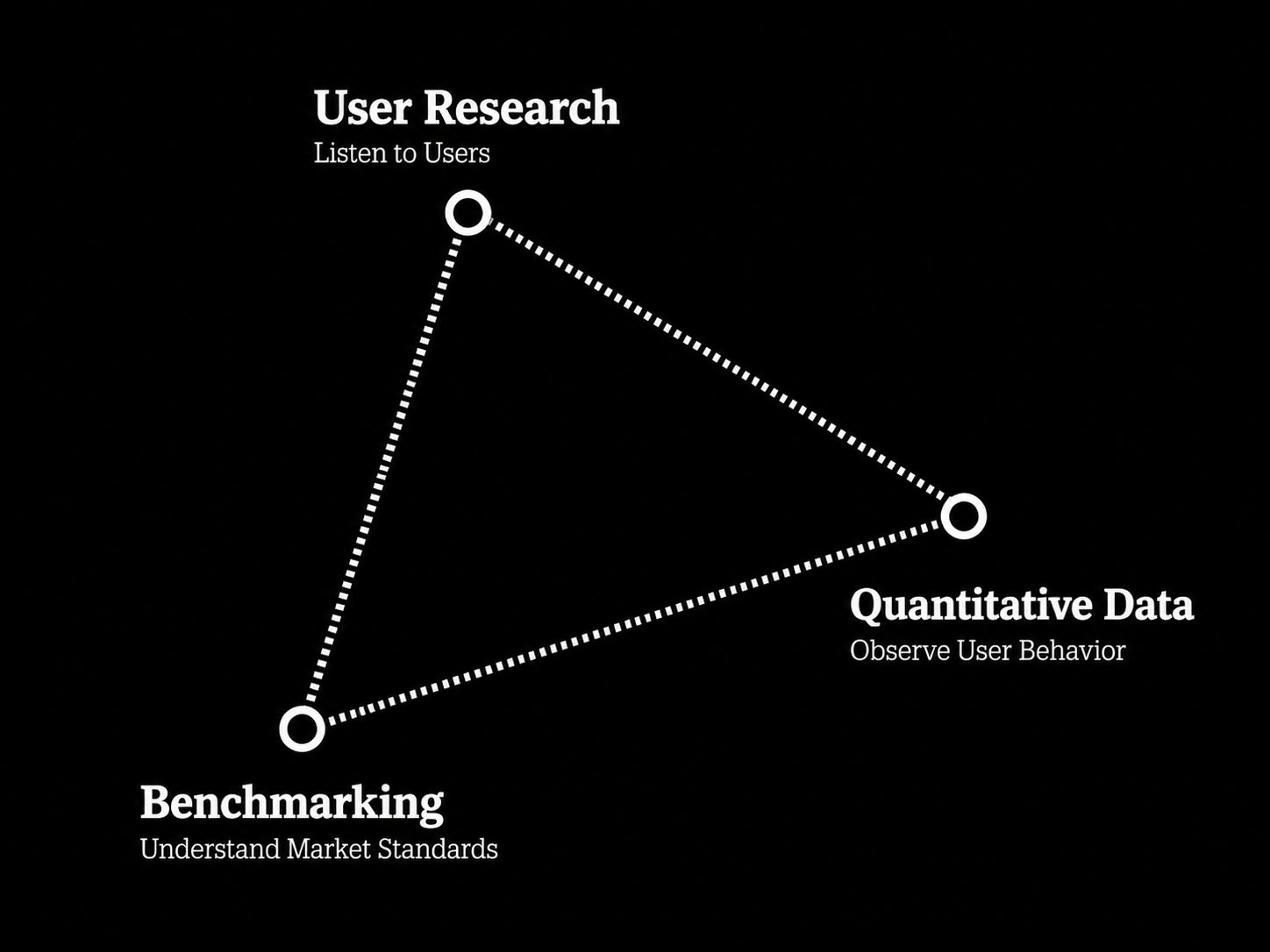
The data existed. The UX connection did not.

Across four clients, I built a research framework that turns quantitative and qualitative signals into actionable UX strategy.
Clients
Cass · Adobe · UNSW · CJ Foods
Role
UX Strategy & Research Lead
Year
2022 – 2024
Methods
Social listening · VOC · UX audit · Interview · Competitive analysis
Data-Driven UX Research
Research framework — 3 integrated layers
001
Collect & Structure
Connect data sources around user behavior and business goals.
Social listening & keyword analysis
VOC (Voice of Customer)
1:1 user interviews
UX audit
002
Synthesise & Frame
Find the patterns behind user needs and UX gaps.
Competitive analysis
User behavior pattern mapping
Priority matrix
003
Shape UX Direction
Turn research into flows, IA, and clear improvement priorities.
UX Flow & IA redesign
Actionable improvement direction
Decision framework for teams
Applied across four clients
Client 01 · 2022–2024
Cass — From social signals to UX priorities

Cass had the data.
The missing piece was direction.

I translated social listening, VOC, and behavior patterns into UX flow and IA improvement priorities.

Key finding 01
55% of wellness & beer conversations
— users associate Cass with stress relief, not just drinking occasions
Key finding 02
76% New beer concerns
Awareness was high, but users dropped between consideration and action.
Key finding 03
71% Negative feedback
Recurring friction points were mapped to UX flow improvement priorities.
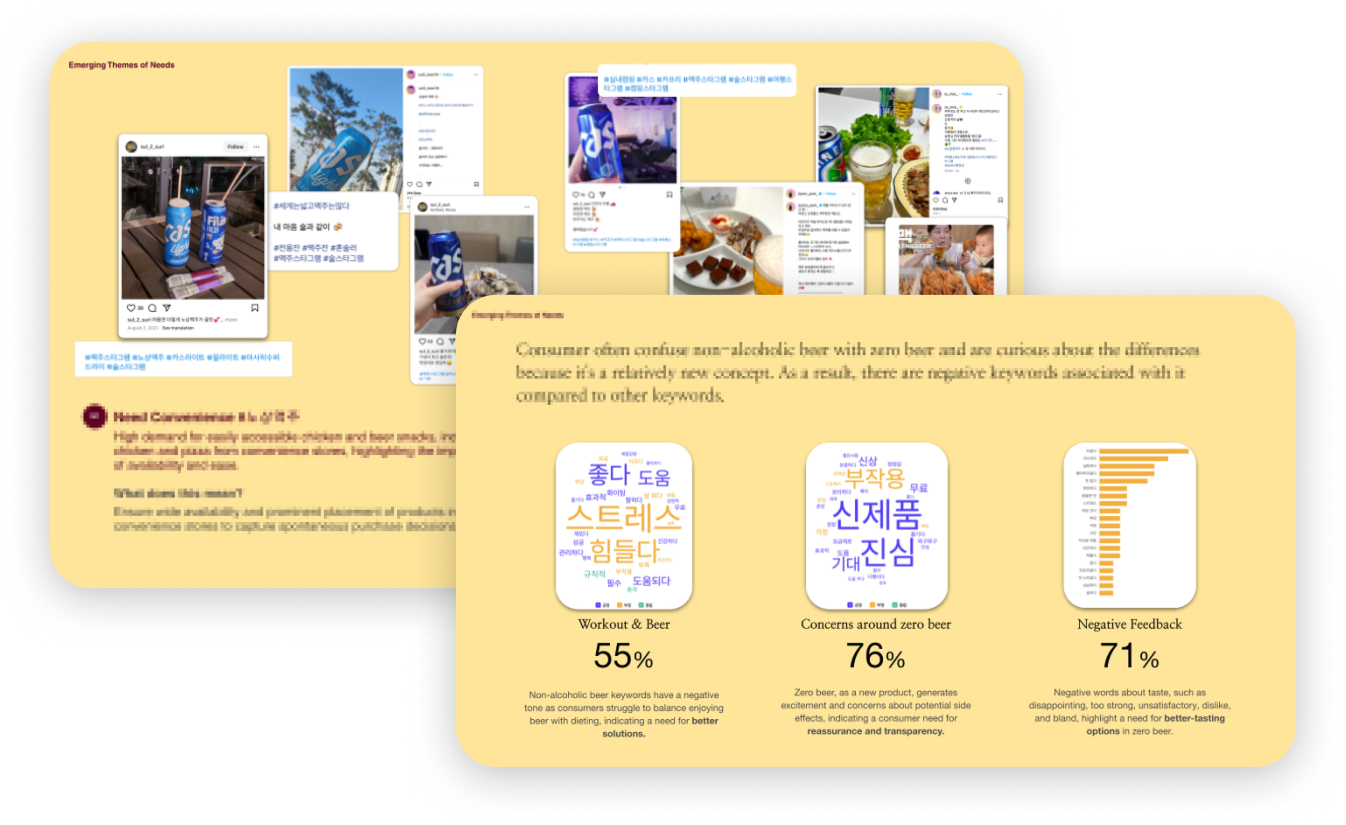
Cass social listening keyword analysis
Cass brand perception analysis, 2024
UX direction output
Turned behavior patterns and need clusters into UX flow and IA redesign directions.
Client 02 · 2022–2023
Adobe — From UI comparison to strategic UX criteria

Adobe was comparing layouts.

I shifted the benchmark toward behavior, conversion, and local market fit.
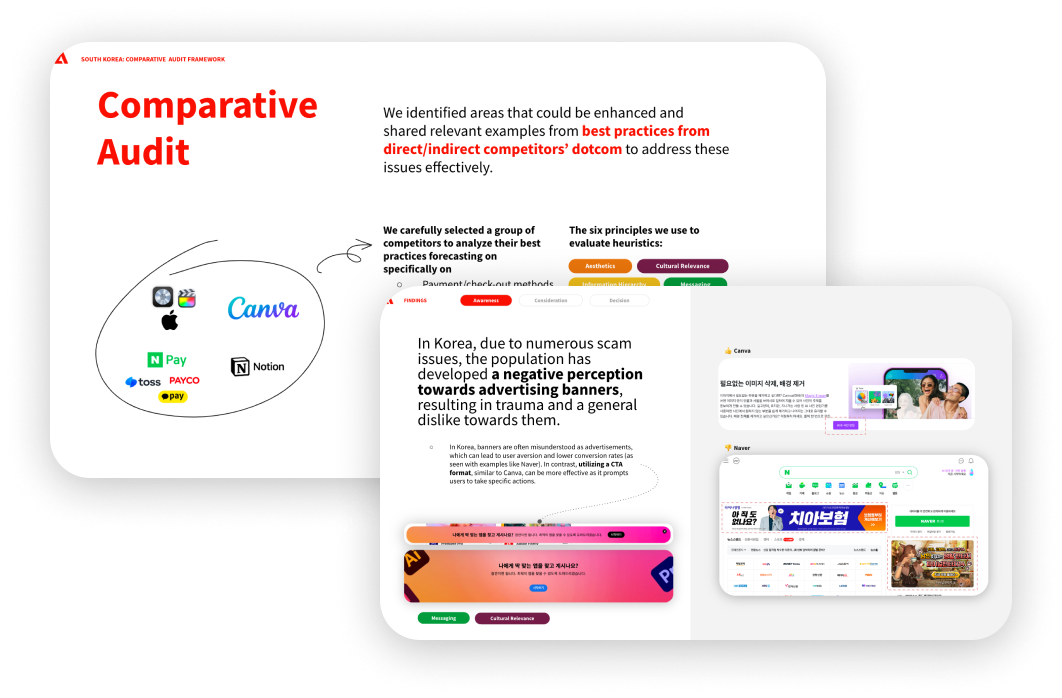
Framework shift
From UI-first benchmarking to strategy-first evaluation.
Key finding
In Korea, CTA-style prompts performed better than banner ads, which users perceived negatively.
Cultural insight
Global design patterns needed local adaptation to work effectively.
Adobe comparative audit — competitor CX benchmark, Korean market CTA analysis
Adobe UX competitive benchmark, 2022
UX direction output

Cultural UX recommendations for Korea and Japan sites.

Form followed local behavior, not the global template.

Client 03 · 2023–2024
UNSW — From transcripts to UX decisions

I used AI-assisted transcription and tagging to find patterns across 20+ stakeholder interviews.

The output was a participation-first UX flow and IA structure, shaped by user behavior instead of information delivery.
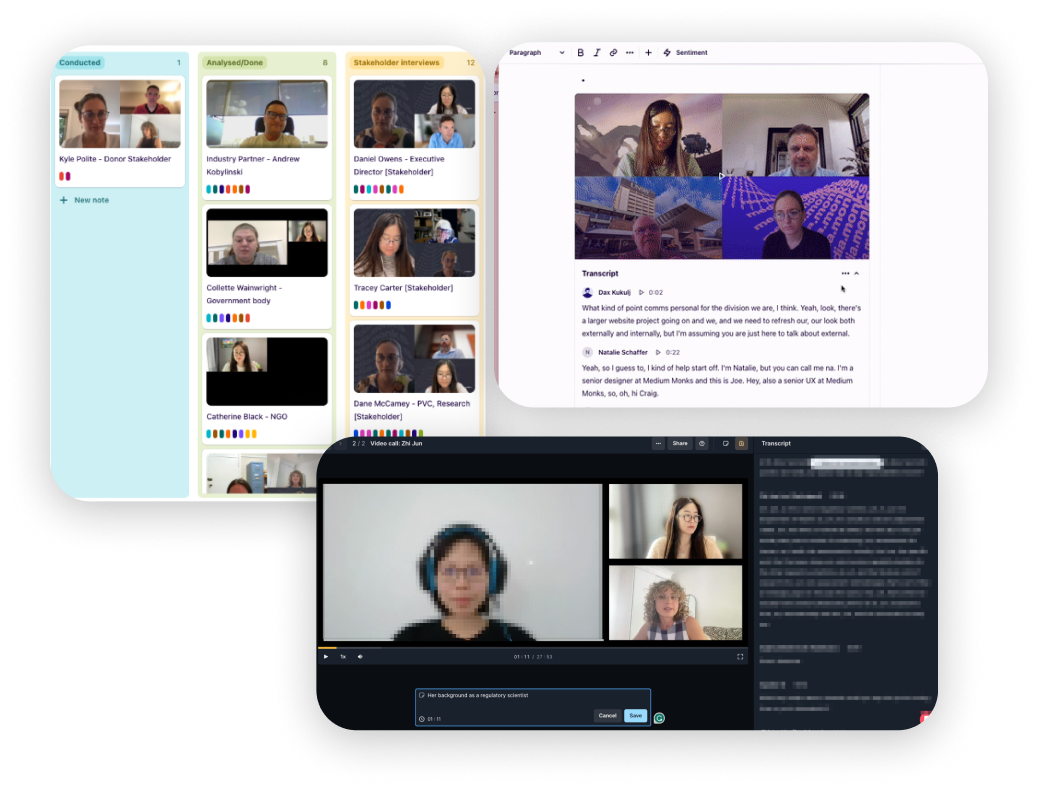
Method innovation
AI transcription and tagging reduced analysis time and surfaced patterns faster.
Key finding
Users engaged more when they had an active role, not just information to read.
Cross-cultural insight
Multi-cultural teams had different decision-making styles, so UX decisions had to account for communication gaps.
UNSW stakeholder interview pipeline — kanban, transcript analysis, video review
UNSW 1:1 interview analysis pipeline, 2023
UX direction output
Turned user behavior and needs into a participation-first UX flow and IA structure.
Client 04 · 2023
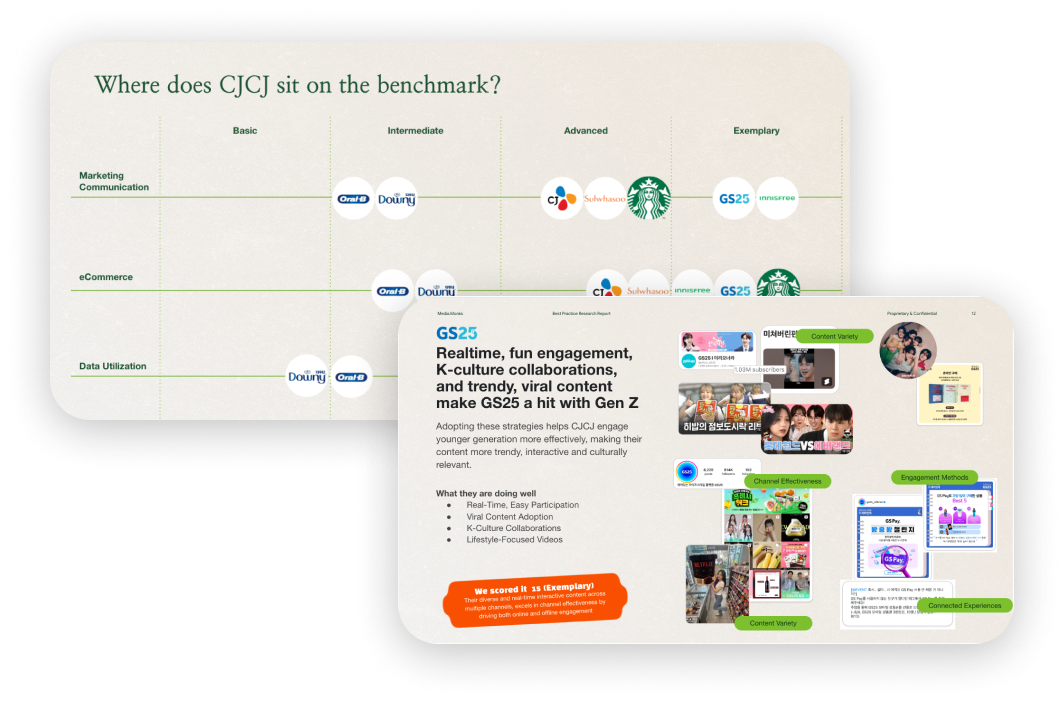
CJ Foods — From category benchmark to CX positioning

I compared CJ’s digital experience against global best-practice CX and channel operations.

The output was a clearer positioning direction shaped by broader market standards, not only direct competitors.
Method
Global best-practice benchmark across CX strategy and channel operations.
Key finding
CJ had gaps in channel-level experience consistency.
Cross-market insight
Best-in-class patterns outside the category revealed positioning opportunities local competitor analysis would have missed.
CJ CX competitor benchmark — GS25 best-practice deep dive
CJ Foods CX competitor benchmark, 2023
UX direction output
Digital CX positioning direction benchmarked against global best practice, not only category competitors.
More Work View all →